
Alumnus Named to National Academies Committee on Veterans Study
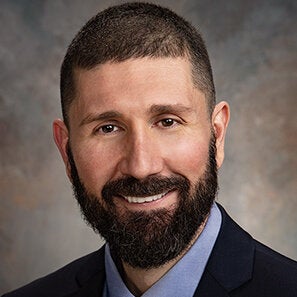
Dr. David L. Albright (MSW ’06, PhD ’12), a university distinguished professor at The University of Alabama, has been appointed to the National Academies of Sciences, Engineering and Medicine Committee on the Epidemiologic Study on the Health of Veterans Who Served at Fort McClellan, 1979-1999.
Fort McClellan was an Army base in Anniston, Alabama, that closed in 1999. It served as a major training site for the U.S. Army Chemical Corps School, the Army Military Police School, and the Women’s Army Corps, and housed units specializing in chemical, biological and radiological defense. Veterans who served there have reported exposures to radioactive materials, chemical warfare agents and industrial contaminants linked to the surrounding Anniston area, though the degree and health consequences of those exposures have not been independently established at scale.
The study comes amid growing congressional attention to the long-term health consequences of military environmental exposures. Legislation introduced in recent sessions has sought to establish presumptive service connections for Fort McClellan veterans, reflecting sustained advocacy from veteran communities who have reported elevated rates of illness.
The National Academies’ committee was convened to provide the independent scientific foundation that policymakers on both sides of the debate have said is necessary before benefit determinations can be made.
The epidemiological study is designed to examine environmental exposures and health outcomes among Fort McClellan veterans through two components:
- A health survey of veterans to assess their current health status and document reported exposures during their service, and
- A mortality analysis of deceased veterans who served during this period.
Through these assessments, the committee will produce an independent, evidence-based evaluation of whether service at Fort McClellan was associated with adverse health outcomes, along with recommendations to guide Veterans Administration policy on benefits eligibility and health care access for affected veterans.
Albright’s expertise as a nationally recognized expert in veterans’ health and rural policy and his experience as chair of the U.S. Department of Veterans Affairs Veterans’ Rural Health Advisory Committee, is a boon to the study’s mission to provide insights for both veterans and the U.S. Department of Veterans Affairs.
This new role also marks Dr. Albright’s sixth appointment on a National Academies of Sciences, Engineering and Medicine committee, and one that resonates with him personally. Not only is the study in his home state of Alabama, but he is also a veteran.
“I served in the Army Infantry, so I’m not approaching this population from the outside,” he said. “I understand the culture, the way service shapes your identity and the way a lot of veterans relate to asking for help, which is to say, reluctantly. I also understand what it means to trust an institution with something important and have it fall short. These veterans have been patient. They deserve rigor and they deserve candor about what the evidence shows.”
Dr. Albright’s appointment also draws on a decade of applied research through VitAL, a statewide applied research and technical assistance organization that he founded and leads as principal investigator to improve workforce, wellness and policy in Alabama. Operating across all 67 counties in partnership with state agencies and local governments, VitAL has given Dr. Albright sustained experience in translating research into policy within the same state systems that many Fort McClellan veterans navigate.
“We work directly with state agencies, local governments and community partners to translate research into real program and policy decisions. The goal has always been to build something that works within existing systems and make them stronger, not to replace them. For veterans, a lot of that means addressing access, particularly in rural areas,” Dr. Albright said.
That systems-level thinking directly shapes how Dr. Albright approaches the Fort McClellan study.
“I think about systems, how they are designed, how they actually function, and where they break down for the people who need them most,” he said. “Veterans navigating VA health care, especially in rural areas, aren’t just dealing with a health issue. They’re dealing with geography, access, trust.”
The results of the study are anticipated to be released in 2028.
For veterans who have sought answers for decades, the committee’s findings will carry considerable weight.