
Alumna Explores the Breadth of Social Work from Micro to Macro
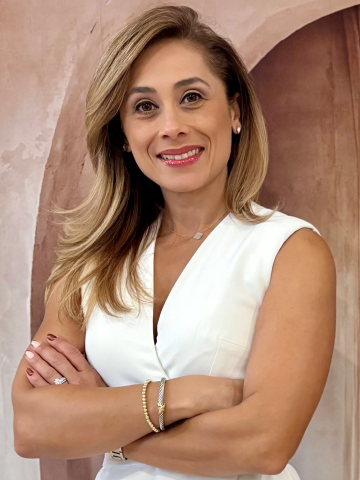
"My vision for my career began when I was seventeen years old," reminisced Edlin Hernandez. "I met a trained social worker who shared his journey working in a hospital-based program supporting young teen mothers, connecting them with resources to help them succeed."
With such an early interest in social work, when Edlin finished her associate's degree at Miami Dade College, she was ready to declare her major when she arrived at Florida State University. What struck her on her arrival in the BSW Program was the program's intimacy. "I recall a sense of family amongst faculty and students, and the accessibility to connect and communicate with your professor was invaluable."
After earning her BSW in 2006, it made perfect sense to stay on to expand her knowledge in her chosen profession. With a solid foundation in social work, Edlin began putting theory into practice in the MSW program. One pivotal experience included completing a graduate assistantship in research with then-dean, Dr. Aaron McNeece, whose research focused heavily on evidence-based practice in social work.
"This experience was truly a privilege, as Dean McNeece had been a strong supporter of my development even during my BSW studies," she emphasized, which included his encouragement for Edlin to participate in a leadership role within the FSU chapter of the National Collegiate Hispanic Honor Society, or Sociedad Nacional Honoraria Hispánica. This affiliation carried on for many years after graduation.
The capstone of her MSW program would be her field placement at an inpatient/outpatient rehabilitation program, which Edlin described as "the experience that truly helped shape my interests and strengthened my confidence working with individuals who have complex needs."
Equipped with a Master of Social Work degree in 2007, she began her social work career focused on mezzo social work practice, working with youth in foster care who had experienced abuse and were no longer living with their families. After two years in this line of work, she transitioned to a similar role during the Great Recession of the 2010s, working with a unique population – refugee and immigrant children.
Edlin found herself not just navigating the typical social work and case management challenges. She was confronted with a variety of legal statuses for children from a wide range of countries, including Burma, the Republic of Congo, Central America, Haiti, Nepal, and Cuba.
Within this organization in Washington, DC, she was not only able to support these children with complex trauma on a mezzo level but was able to grow in her career, stepping into more macro social work-level roles.
For several years, she served in several directorial and management roles, including consulting with a legal services organization supporting refugees and immigrants, working on clinical program development, coordination and systems navigation. She also worked directly with the US Office of Refugee Resettlement as a program manager at the Refugee Processing Center, supporting oversight, interagency collaboration and service delivery.
Although working in a helping profession provided Edlin a clear sense of purpose and reinforced her commitment to serving her clients, her career path wasn't without its challenges.
"Social work is not an easy profession and one of the challenges I was less prepared for was the amount of bureaucracy and barriers at the systems level that exist in the field," she shared. "The red tape, documentation demands, and limitations within systems can sometimes feel at odds with the values of social work and the desire to provide meaningful care."
What made all the difference was a solid foundation in social work education, theory, and practice, and learning to utilize them to navigate the realities social workers face across all career settings. "My education gave me the flexibility and resilience to adapt," she stressed.
With motherhood came another shift in career to a more micro social work level, Edlin expressing that "returning to my clinical felt like a natural and intentional shift. I was drawn back to direct clinical work that allowed for depth, connection and meaningful impact."
For eight years now, she has managed her own telehealth private practice, utilizing evidence-based practices, including cognitive-behavioral therapy and eye movement desensitization and reprocessing.
Edlin found that what was critical for helping her navigate the many twists and turns her career path had taken was not imposing limits on herself. "Recognize the potential for growth and development," she underscored. "It is essential to maintain an open mind when considering areas of specialization. Social work offers an impressive variety of populations and roles, providing ample opportunities to learn, grow and evolve throughout your professional life."