
Social Work Alumna Career Focuses on Cultivating Compassion
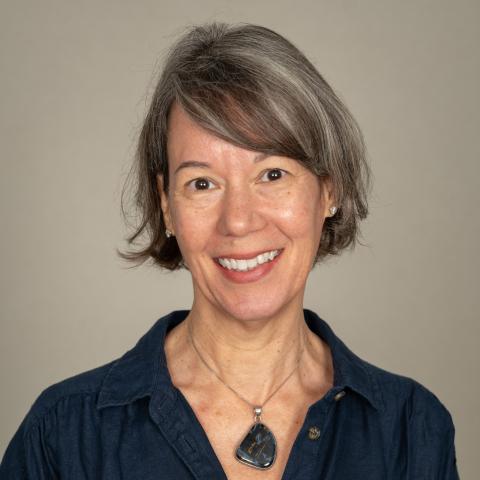
“I have always been fascinated by human behavior, our relationships with others and what contributes to our individual and collective well-being,” recalled Leslie Langbert (BS ’93, MSW ’95), “and the Master of Social Work program was an ideal opportunity for me to gain the training to work in behavioral health with clients from a lens of recognizing their resilience, and also understanding the environmental and structural factors that shape their experiences.”
A Florida native, Leslie grew up in Jacksonville and found great fulfillment in her social science studies, including sociology, psychology, and social work. After completing her MSW degree, she earned her social work licensure. She worked for many years in Palm Beach County, Florida, with children and families in prevention-based programs, youth mentoring, and as a psychotherapist in community mental health clinics and a hospital-based child development program.
After years in direct service, she experienced low-level burnout and empathetic distress that can accompany work in the helping professions. She pivoted her career to a more administrative and managerial role at the Children’s Services Council of Palm Beach County, focusing on funding and building capacity for organizations working to improve maternal/child health, positive youth development, and the prevention and reduction of child abuse. Several years in this role led to an opportunity to work for the nonprofit MENTOR/National Mentoring Partnership.
“I spent two years helping to expand mentoring opportunities for young people across the nation, by working with major metropolitan areas and states to develop mentoring partnerships - private and public sector non-partisan capacity-building centers that support local mentoring programs to connect more youths with supportive mentoring relationships,” Leslie explained.
While stimulating, working in demanding leadership roles based in both Washington, DC and New York City led her to consider the next stage of her career, one more centered on personal growth. Settling in Tucson, Arizona, Leslie discovered the emerging field of compassion science while working at the University of Arizona. “My introduction to this field happened through a lucky incident of being in the right place at the right time.”
Cultivating Compassion
The developer of Cognitively Based Compassion Training © (CBCT) and Executive Director of the Center for Contemplative Science and Compassion-Based Ethics at Emory University, Dr. Lobsang Tenzin Negi, visited the University of Arizona campus for a week-long visit, centered on a research study exploring the impact of CBCT on health and well-being. During his visit, he was seeking out persons interested in becoming Certified CBCT Instructors to share CBCT with participants of future research studies and Leslie was recommended by university colleagues. “That was in 2012, and I’ve been engaged in CBCT as a practitioner and instructor ever since,” shared Leslie with enthusiasm. “Anyone can benefit from CBCT. It is a powerful program that helps us to further cultivate and expand the skills we already have as humans, our natural tendencies toward connection, warmth, and compassion.”
Leslie notes that research indicates that compassion is a biological trait innate to humans, which we can train to expand beyond those we are close to. She also pointed out just how powerful CBCT has been in her own life, helping her navigate uncertainty and difficulties by cultivating the ability to shift perspective as needed to see the beauty and compassion all around, every day, which often go unnoticed.
“Research studies on compassion have revealed so far that cultivating compassion benefits our health, helps reduce symptoms of depression and anxiety, supports feeling more connected with others and increases empathy,” she explained. “We need compassion more than ever and ways to access and sustain it for ourselves and others.”
This area of study also set the trajectory for the next stage of her career. She cofounded and served as executive director of the Center for Compassion Studies at the University of Arizona for a decade, teaching students and community members compassion-based resiliency and well-being skills. And Leslie now serves as the assistant director of CBCT Programs at Emory University’s Center for Contemplative Science and Compassion-Based Ethics in Atlanta, Georgia.
With her background in social work, Leslie is all too familiar with the potential for burnout and compassion fatigue, and she notes the importance of maintaining compassion for yourself and others for personal growth and to sustain a career in a helping profession.
“Compassion enhances our resilience and capacities to work more skillfully with emotions and thoughts, our ability to navigate life’s challenges and to hold ourselves and others with kindness and care, and recognize the ways we can alleviate suffering when we encounter it without being overwhelmed by it,” she emphasized. “It is such a joy and a privilege to share this practice with others.”
Adding: “The Dalai Lama has said, ‘Compassion and kindness are not luxuries. Without them, humanity cannot survive.”