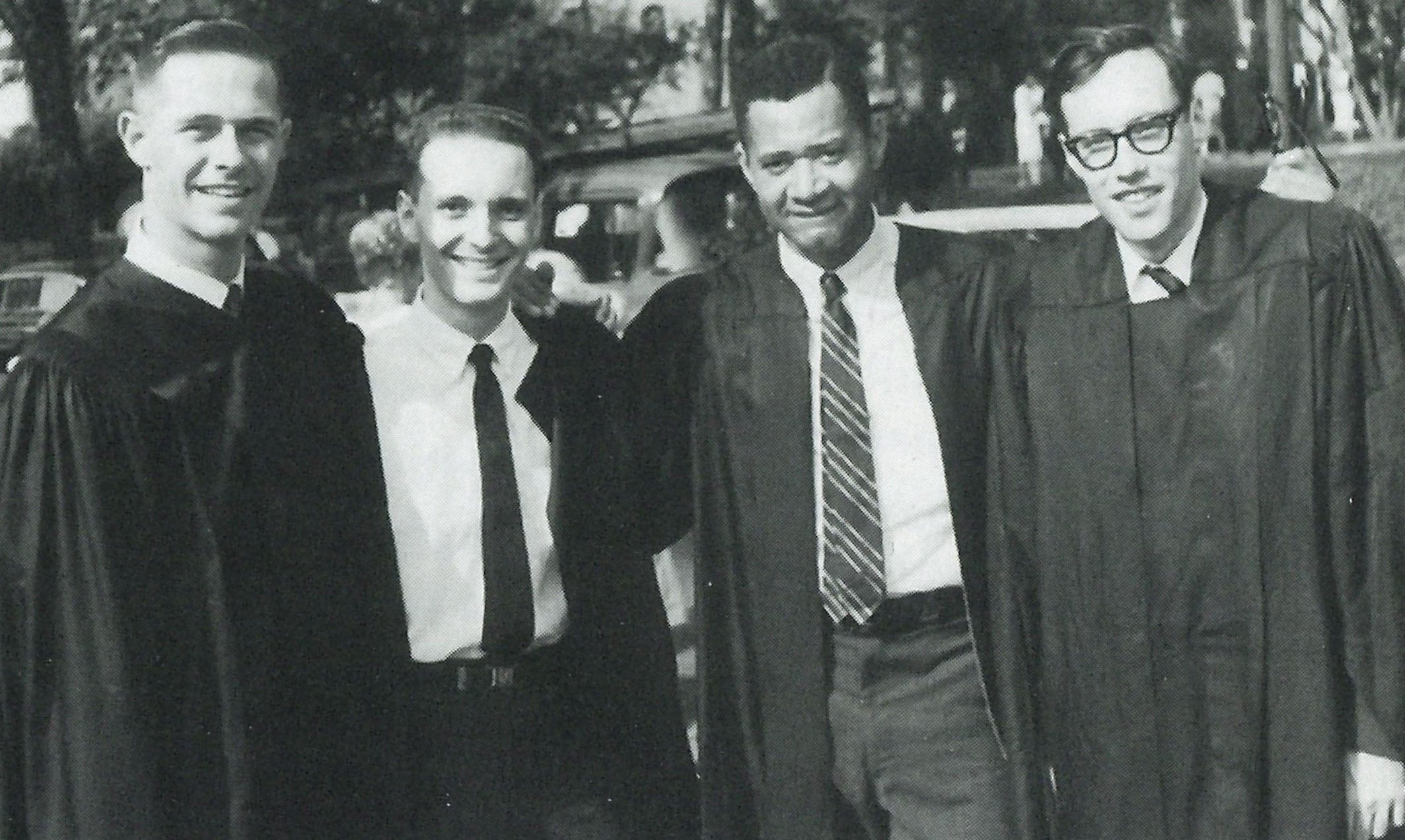
Faculty Member Endows Walter Hudson Doctoral Scholarship

Dr. Walter Hudson was a highly regarded faculty member at the FSU College of Social Work during the 1980s and came back in the 1990s. When Dr. Hudson passed away in 1999, he was posthumously honored by colleagues, family, and friends who contributed to fund a scholarship for future doctoral students. More than a dozen students were supported by the scholarship over the years. Eventually, however, the funds were depleted, and the fund was on the verge of being closed.
To keep the memory and influence of his colleague alive for generations, in 2025, Dr. Bruce Thyer endowed the Walter Hudson Doctoral Scholarship with a personal gift. Dr. Thyer’s generosity means that Dr. Hudson will be remembered and doctoral students will be supported in perpetuity at FSU’s College of Social Work.
“As I enter the latter stages of my own career as a professor, I found myself wondering how I could help promote Walter’s academic interests,” shared Dr. Thyer, a distinguished research professor at the College of Social Work. “I learned that the FSU Foundation makes it possible to endow a named professorship or scholarship via bequest in one’s will. So, I arranged to initially fund this Walter Hudson Doctoral Scholarship via a bequest. This was very easy to arrange, and I encourage other faculty and alumni to consider making a similar arrangement.”
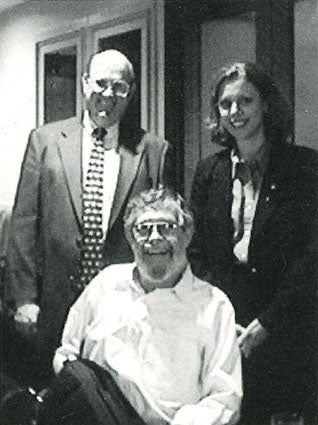
Dr. Thyer’s connection to Dr. Hudson began early in his career and continued through a lifelong friendship. “I joined FSU as a new assistant professor in 1984, and Walter Hudson was on the faculty,” recalled Dr. Thyer. “I was delighted to have him as a colleague, and we quickly bonded both academically and socially.”
Dr. Hudson’s career in social work spanned more than 40 years with a significant impact on the profession including what was described in a tribute by Paula Nurius in a 2002 issue of the journal Research on Social Work Practice as, “including but not limited to measurement theory, development and testing of assessment and outcome evaluation tools, statistics, evidence-based practice, methodology, and computer applications for practice.”
His prolific scholarship in measurement development and clinical assessment was recognized by the Society for Social Work Research in 1999, when he received the inaugural Distinguished Career Achievement Award for his contributions to the field of social work. The very same year, Dr. Hudson passed away at the age of 65.
“He was an early and effective promoter of what was then called empirical clinical practice,” described Dr. Thyer, “calling for a closer integration of the findings of high-quality science into practice decisions.”
The Legacy of Dr. Walter Hudson
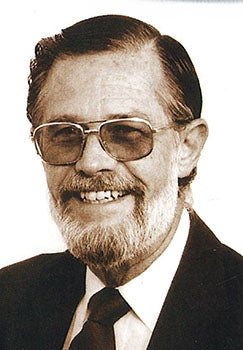
Prior to a career in social work, Dr. Hudson was an Army veteran who earned two Certificates of Merit for Outstanding Performance. But a time of hardship for him and his family after his army career led him to seek aid from Catholic Charities, which lined up a job as a caseworker with Cook County Public Aid. Falling in love with the social work profession, Dr. Hudson remained with the agency for a decade, rising to director of the research and statistics division.
He attended the University of Chicago, earning a bachelor’s degree in psychology, as well as master’s and doctoral degrees from the School of Social Service Administration. His social work career in higher education spanned several institutions and roles, including Loyola University, the University of Chicago, Washington University, University of Hawaii, Arizona State University, and Florida State University.
Dr. Hudson’s impact included the design and validation of numerous rapid assessment instruments, many of which were included in his book, The Clinical Measurement Package: A Field Manual, which is still available for purchase online. He is also known for the axioms:
- If you cannot measure a client’s problem, it does not exist.
- If you cannot measure a client’s problem, you cannot treat it.
The axioms were described in a 1999 newsletter article commemorating his receiving the SSWR achievement award, which shared that the “Hudson’s First Axioms of Treatment are now found in most social work texts on evaluation of practice.”
” In my view, then and now, he was a giant in the field of social work by promoting high-quality research in social work,” said Dr. Thyer. “His work was enormously influential and his legacy was perpetuated by the many doctoral students he worked with as a dissertation chair and committee member.”
Dr. Thyer has ensured that Dr. Hudson’s legacy is honored and remembered through a scholarship bearing his name that will benefit future social work scholars. If you’d like to support the Walter Hudson Doctoral Scholarship, visit give.fsu.edu/WaltHudson or to support another professorship or scholarship, contact Paige McKay Kubik at pmkubik@fsu.edu.