
FSU Social Work and Florida Institute for Child Welfare Participate in AI Day in the Capital
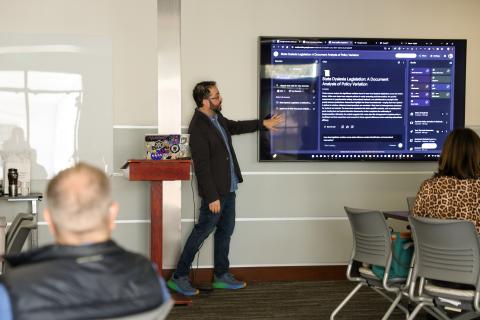
On January 22, the FSU College of Law hosted the 2026 FSU AI Day in the Capital event, which brought together leaders in government, law, technology, and academia from across the university to examine the rapidly evolving landscape of artificial intelligence (AI) and its implications for public institutions, civic infrastructure and ethical governance.
The event explored how AI can be responsibly integrated into state systems, enhance public services, expand access to justice, and support informed policy development across Florida and beyond.
Throughout the day, attendees engaged in keynote conversations, expert panels and collaborative discussions, including an interactive breakout session on vibe coding with Dr. Yaacov Petscher, the associate dean of research at the College of Social Work and director of the Quantitative Methodology and Innovation Division at the Florida Center for Reading Research. Dr. Petscher demonstrated how vibe coding, which uses AI to generate code from natural language prompts, makes app creation for the purpose of translating research findings into accessible information for communities and families more accessible, regardless of technical background.
Interactive AI Demonstrations
AI and Pediatric Health Research
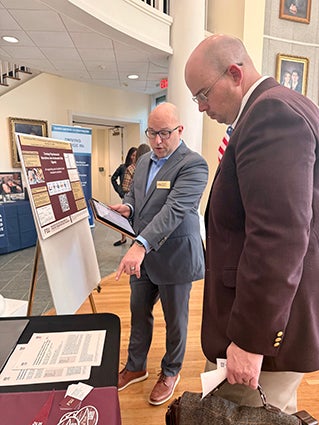
Event attendees also had the opportunity to experience hands-on demonstrations and discuss current research applications of AI at Florida State. "FSU AI Day at the Capital was a great opportunity to highlight our new, exciting work emerging through FSU Health and our expanding partnerships across the state," explained Dr. Michael Killian, an associate professor at the College of Social Work.
"Our team is building cutting-edge AI-supported tools to strengthen pediatric transplant care, and it felt important to represent social work research in this space, particularly because psychosocial assessment and social determinants of health are central drivers of medical outcomes."
Dr. Killian and Doctoral Candidate Sonnie Mayewski discussed with visitors the AI-enhanced Pediatric Psychosocial Assessment Tool, a project being developed through the Initiative for the Advancement of Pediatric Transplant Health Research, a collaborative partnership between Florida State University through FSU Health and the College of Social Work with the University of Florida's Congenital Heart Center.
The assessment evaluates psychosocial risks and protective factors in pediatric transplant settings (caregiver capacity, family stress, barriers to follow-up care, mental health needs, transportation, housing, etc.). "These psychosocial factors often influence critical outcomes like medication adherence and transplant rejection," emphasized Dr. Killian. "The point of completing the assessment during the pre-transplant period before listing the patient on the transplant list is to find supports and resources to help the patient and family navigate the difficult periods pre- and early post-transplant."
"This is an especially exciting moment because this work is not theoretical. We're actively building a translational research pipeline that connects real clinical workflow with AI-enabled insights."
AI and Child Welfare
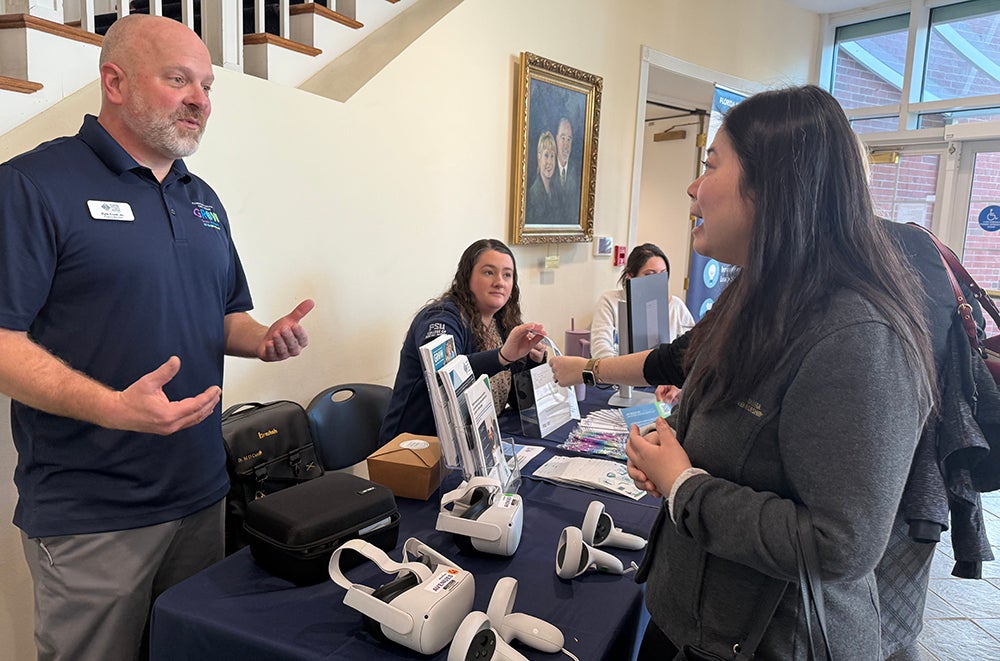
The Florida Institute for Child Welfare, housed within the FSU College of Social Work, also provided opportunities for attendees to engage with the emerging AI-powered technologies the institute is using to support the child welfare workforce and improve outcomes for children and families in Florida.
"We are using AI at FICW to help simulate real-world interactions for students who are pursuing a career in child welfare. The workforce is also utilizing this technology in pre-service and other applications," shared Kyle Cook, program manager for the Academic Innovation program at the institute. "Using AI, we can create an environment that feels intense and emotional; one that engages the participant to experience the high stakes in child welfare cases, while maintaining a low risk for negative outcomes. It creates a space that is safe to explore and to develop resiliency for the many challenges that child welfare professionals face."
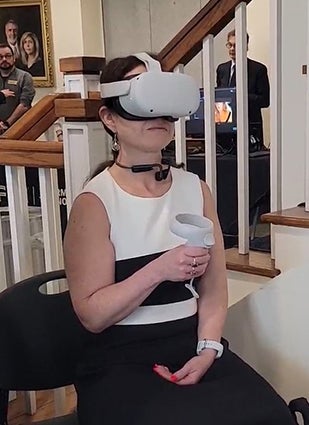
Event participants experienced the institute's virtual reality headsets, which simulate countless possible interactions and outcomes that child welfare professionals encounter in the field. AI technology allows the institute to develop "virtual homes," or environments that simulate realistic, trauma-informed practice spaces where someone can engage with simulated families, observe home conditions and practice critical decision-making skills.
"Digitally rendered home settings mirror real-world living conditions child welfare workers encounter," emphasized Cook. "AI is particularly beneficial in child welfare because it enables practice without risk. The virtual homes allow workers and students to navigate complex, charged situations. This supports learning, reduces anxiety and prepares the workforce for real-world complexity."
While the potential uses and impacts of AI currently seem limitless and sometimes concerning, projects like these demonstrate how the technology can offer practical, measurable benefits that improve health and well-being across a variety of populations.
Using AI Responsibly
The event highlighted many of the exciting ways AI can aid research and support services for citizens, but also raised awareness about how to utilize artificial intelligence in a safe, responsible manner.
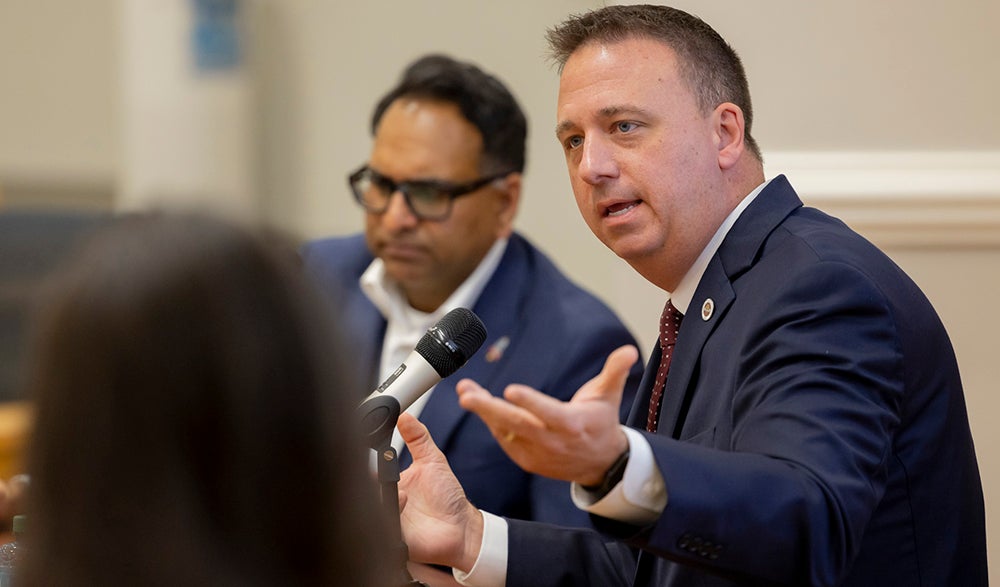
A key message in this vein was shared during a symposium on “AI and the Public Good” centered around discussing how AI is reshaping public services, education and justice, moderated by Saif Ishoof of Lab22c. The panel included insights from FSU Associate Vice President and Chief Information Officer Jonathan Fozard, along with CEO of Outrival AI, Ruben Harris, and Associate General Counsel at IRG Venures, Emily Cabrera.
Fozard noted that data security and safety take precedence over flashy technology at institutions like FSU. “When we think about AI, we don’t think about what’s the flashy and cool thing,” he said. “It’s how can we make sure that it’s secure in what we’re solving? One of the things you must think about at Florida State is it’s not just about college classes. We also have K-12 schools that are part of the FSU system. We have a wide variety of protection that we must do from minors to college students to adults.”
Participating researchers likewise noted the high level of engagement and enthusiasm to learn about emerging AI technologies and how they can be used for the good of humanity.
"AI is a tool, and like any tool, outcomes depend on design, oversight and ethics. Events like this make it clear that the public is ready for this conversation and social work should be helping lead it," underscored Dr. Killian. "This event shows the value of sharing research through accessible public-facing platforms and using visuals and demonstrations rather than relying only on academic publications."